
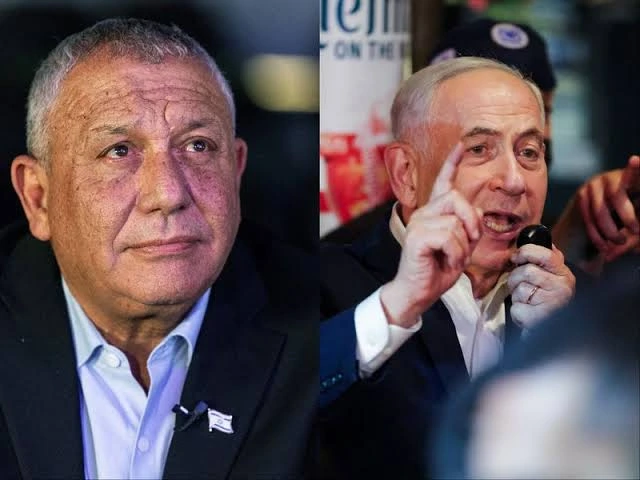
Israel’s national election has ended without a clear winner, leaving Prime Minister Benjamin Netanyahu and opposition leader Gadi Eisenkot facing a difficult battle to form the next government. Exit polls released after voting on October 27 indicated a closely contested race, with neither major political bloc appearing to have secured the 61 seats required for a majority in the 120-member Knesset, Israel’s parliament. Early vote-counting figures showed Netanyahu’s Likud party leading as the country awaited more definitive results.
The election witnessed voter turnout of approximately 77.7%, the highest level in more than two decades, according to Israel’s Central Elections Committee. The campaign focused on national security, the wars involving Israel and regional tensions, alongside disagreements over the country’s political direction. Eisenkot, a former military chief, presented his campaign as an opportunity for political change and national unity, while Netanyahu highlighted his government’s security record.
The results could lead to prolonged coalition negotiations, as smaller parties and Arab-led political groups may play a significant role in determining which bloc can form a government. Israel’s president, Isaac Herzog, is expected to consult political parties before assigning a candidate the task of forming a coalition. If neither side succeeds in securing sufficient parliamentary support, the country could face further political uncertainty. Final results and coalition arrangements will determine the next phase of Israel’s political leadership.